
Delusion as Discipline
Becoming your higher self through pure vibes and delusional expectations.
BY: THE MUSE LIBRARY
Images/Photos Sourced From: Pinterest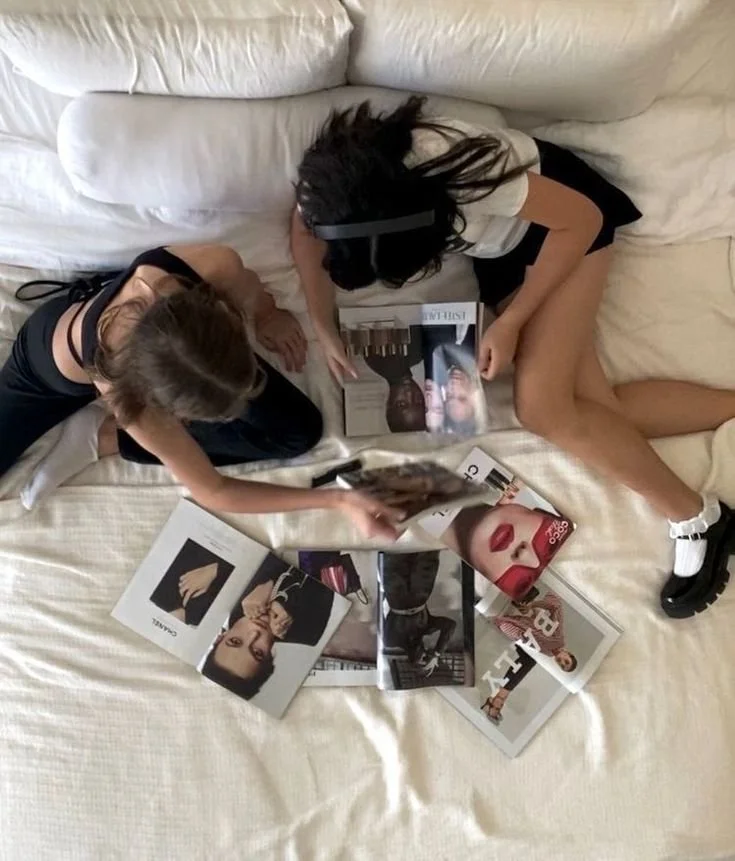
Self-publishing requires a specific kind of mindset. Not loud manifestation. Not vision boards. Something quieter and more controlled. The decision to assume you are already the person who finishes.
Enter; The Law of Assumption. LOA isn’t about wishing, it’s about becoming. Born from mid-century mystic Neville Goddard’s dream-soaked lectures, it’s the idea that reality bends to belief. That what you assume as true, quietly, stubbornly, starts to rearrange the world around you and whether you stop at page twenty-seven or keep writing. It’s manifestation’s moodier, more cerebral sibling: less crystals, more consciousness.
HOW DO I START?
Assume first, become second. Reality tends to follow the girl with the strongest storyline.
At its core, the Law of Assumption asks for delusion dressed as discipline. You start living as if — not pretending, but embodying. Writers disappear in the gap between talent and identity. They draft, revise, hesitate, and wait for proof before allowing themselves to say the sentence out loud: I am a writer. The shift happens when you assume it first. Not arrogantly. Just calmly. You write like someone who expects to finish. You speak about the book like it exists because it does — in progress, unfinished, real.
The universe, doesn’t argue; it mirrors. You build the habit of belief — in your room, on your computer, during the mundane. It’s self-concept as alchemy, rewriting the script in real time.
The magic of it is quiet, borderline cinematic. Not the loud flash of “I got what I wanted,” but the slow, unfolding of a life catching up to your thoughts.
To assume is to declare yourself already in motion — before the evidence, before the applause. It’s the art of acting natural while everything around you starts to change.
-
The content provided on this website is for informational and educational purposes only and is not intended as a substitute for professional advice. This includes, but is not limited to, medical, legal, financial, tax, or other regulated professional advice. The Muse Library does not act as a publisher, literary agent, legal advisor, or financial advisor.
By using this website, you acknowledge and agree that The Muse Library shall not be held liable for any claim, loss, or damage arising from the use of, or reliance upon, any content presented here.
Certain images appearing on this site may be sourced from publicly available platforms for editorial and illustrative purposes only. All intellectual property rights remain with their respective owners. If you are a rights holder and wish to request attribution or removal, please contact us.