
Scoring The Page
Enjoy the silence.
BY: THE MUSE LIBRARY
Images/Photos Sourced From: Pinterest + Madison Wild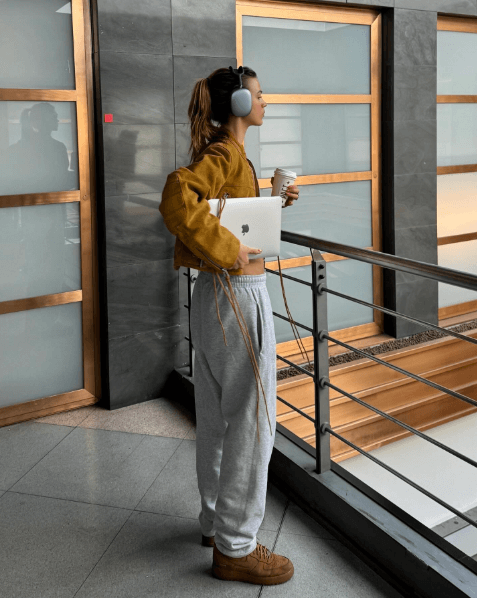
Music doesn’t help you write by filling the silence. It helps by deciding what kind of silence you’re in. Every scene has a temperature before you touch the page—tense or loose, intimate or distant, moving or stalled. Music sets that temperature faster than thought ever could, like flipping a switch before the room has time to argue.
A playlist isn’t background; it’s a room. When you put on headphones, you’re not focusing harder—you’re changing the conditions. The same way lighting edits a face, sound edits a sentence. Words tilt, stretch, hesitate, or sprint depending on what’s humming underneath them.
TUNE SMARTER..
Some scenes want containment: low frequencies, repetition, a beat that holds instead of pushes. Others need friction—sharp edges, sudden shifts, lyrics that interrupt your certainty and make the body restless enough for language to move. The mistake is using one playlist for everything, like every moment in a book should feel the same. You don’t score an entire film with one track; you score scenes.
This is why playlists work as emotional shortcuts. Instead of asking what the scene should feel like, you let the music answer first. Curate, don’t consume—short lists, loopable, forgettable in the right way. Set the room, let sound choose the weather, and write inside it. The sentences will adjust.

-
The content provided on this website is for informational and educational purposes only and is not intended as a substitute for professional advice. This includes, but is not limited to, medical, legal, financial, tax, or other regulated professional advice. The Muse Library does not act as a publisher, literary agent, legal advisor, or financial advisor.
By using this website, you acknowledge and agree that The Muse Library shall not be held liable for any claim, loss, or damage arising from the use of, or reliance upon, any content presented here.
Certain images appearing on this site may be sourced from publicly available platforms for editorial and illustrative purposes only. All intellectual property rights remain with their respective owners. If you are a rights holder and wish to request attribution or removal, please contact us.