
Move The Chair
Creative block isn’t always internal. Sometimes it’s architectural.
BY: THE MUSE LIBRARY
Images/Photos Sourced From: Pinterest + Tania Sarin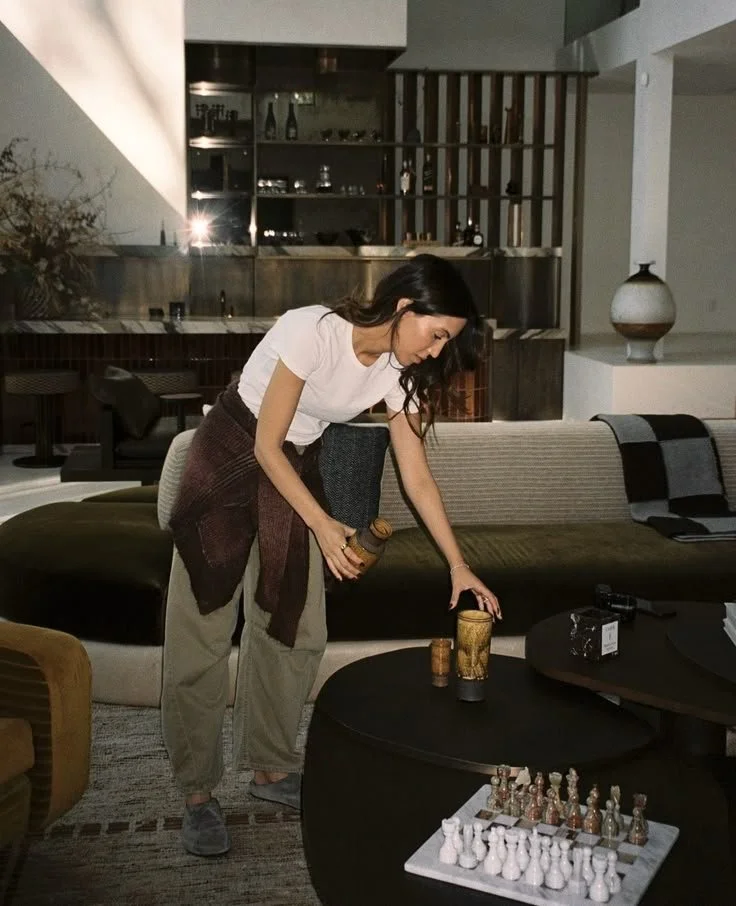
You’re trying to write inside a space that hasn’t moved since you last panicked-cleaned it. The desk is filled with enough coffee mugs to fill a small store. The chair has three sweaters like its about to go to the alps. There’s a pile of half-decisions in the corner that’s developed a presence and a dying plant.
Rearranging your space isn’t a personality trait. It’s a creative reset disguised as a minor interior intervention.
Enter: Feng Shui — spatial psychology with intention. The architecture of energy.
The choreography of a room that either feeds you or quietly eats at you between emails. Born in ancient China, it isn’t a design trend so much as a technology for equilibrium, a language of placement, direction, and flow. Everything has chi. The way you arrange your space decides how that energy moves.
A mirror can double your light or scatter it. A bed too close to the door invites chaos. Furniture is dialogue; clutter is static. Your environment always talks back — the question is whether you’re listening.
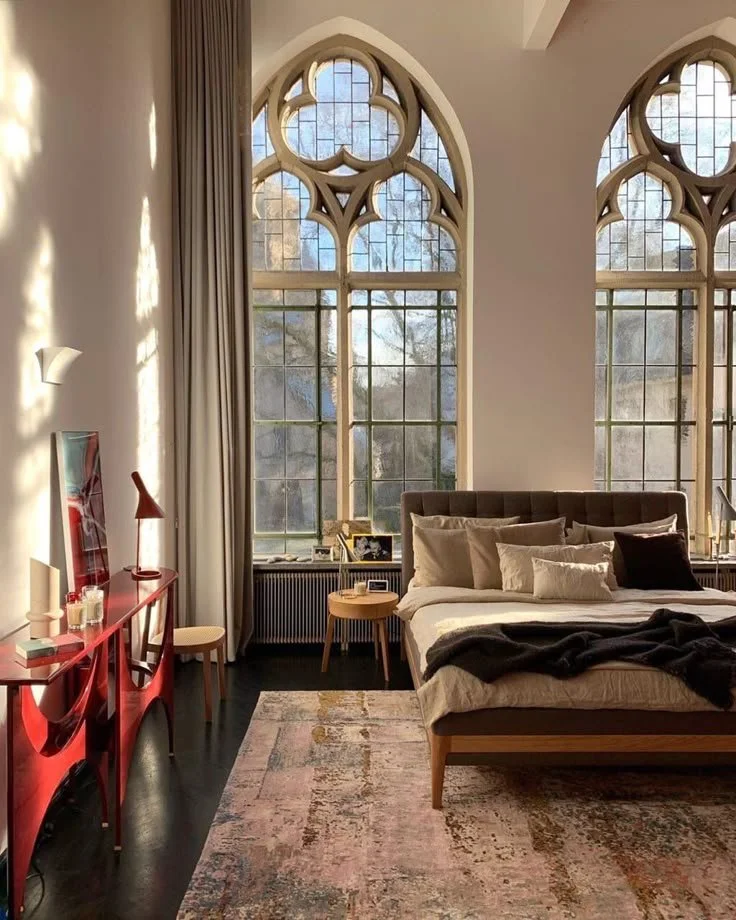
THE DIRECTIONS DECODED..
Feng Shui starts with orientation — your internal compass made external.
North governs career and life path. It’s water energy: flowing, intuitive, alive. Add something dark or fluid — a small fountain, a curved vase, art that feels like movement.
South rules fame, recognition, and clarity. It’s fire energy — visible, warm, radiant. Candles, warm lighting, red accents. It’s the spotlight you’re allowed to stand in.
East carries growth, family, and health. Wood energy — plants, bamboo, green tones, things that climb or stretch. Think upward momentum.
West is creativity and children — metal energy. White tones, rounded shapes, something reflective but soft. The corner for ideas still forming.
Southeast holds wealth and abundance. Wood again, but refined — lush greens, crystals, a plant that refuses to die. A small symbol of continuity and care.
Northwest is helpful people and mentorship. Metal energy — neutral colors, art that honors lineage or collaboration. A good place for photos of people who’ve guided you.
Northeast centers wisdom and self-knowledge. Earth energy — books, natural textures, quiet lighting. The corner that teaches you to pause.
Southwest is love and partnership. Earth energy again — pairs of things, soft tones, materials that feel like touch.
The center of your room is your heartbeat — open, grounded, stable. Keep it clear. Energy can’t circulate through chaos. Round shapes soften corners; plants and intentional light keep things alive. This isn’t decor. It’s choreography.
How to Begin
Stand in the doorway and look in - this is your map. Use it as a snapshot of what you’ve been living inside.
Start with the item that holds you the longest: the bed. Position it so you can see the door, but not meet it head-on. It’s called command position; less spiritual jargon, more psychology. You rest easier when you can see what’s coming. Decide what you want the room to attract — money, connection, momentum. Then curate around that impulse. A living plant. A candle that actually burns. A bowl that collects coins or keys or the proof of a day lived.
Hang art that mirrors what you want to attract. The past already has enough walls. If you work in here, keep your desk facing the door. It’s a quiet assertion of control, a design choice disguised as self-respect.
Move one thing. See how it feels. Feng Shui isn’t about perfection or superstition; it’s choreography. A room with good energy doesn’t announce itself, it aligns. And you feel it.
-
The content provided on this website is for informational and educational purposes only and is not intended as a substitute for professional advice. This includes, but is not limited to, medical, legal, financial, tax, or other regulated professional advice. The Muse Library does not act as a publisher, literary agent, legal advisor, or financial advisor.
By using this website, you acknowledge and agree that The Muse Library shall not be held liable for any claim, loss, or damage arising from the use of, or reliance upon, any content presented here.
Certain images appearing on this site may be sourced from publicly available platforms for editorial and illustrative purposes only. All intellectual property rights remain with their respective owners. If you are a rights holder and wish to request attribution or removal, please contact us.