
The Hot Girl Walk (It Off) 😎
Sometimes the desk IS the enemy.
BY: THE MUSE LIBRARY
Images/Photos Sourced From: Kaia Gerber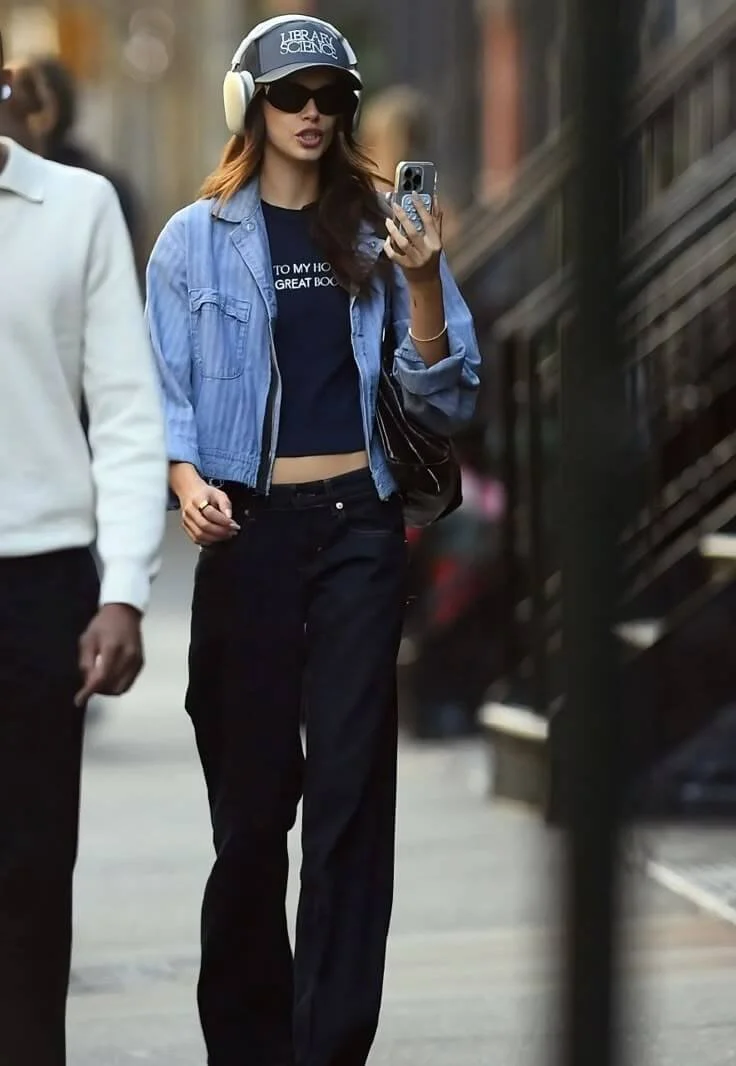
She appears when the city exhales. Breath clouds the air; light fractures on glass. Headphones crown her like armour — the hum of bass and breath syncing heartbeat to rhythm.
Her Angle? Leaving the desk before the writing turns against her. Not quitting. Not procrastinating. Just knowing when staring harder won’t give the sentence anything new.
THE DEETs:
Leave before it turns personal: The moment you reread the same paragraph for the fifth time, go. Don’t negotiate. Stagnation feeds itself. Motion interrupts the loop.
Light first, thoughts later: Ten minutes of daylight before you think about sentences. No sunglasses at first. Let the eyes adjust, let the body wake up. Circadian rhythm sets the tone long before language does.
Walk at thinking speed: Fast enough to feel momentum, slow enough to breathe through your nose. Inhale four counts, exhale six. Longer exhales tell your nervous system it’s safe to let go of the sentence it’s gripping too tightly.
Plug-and-Play: Walking to rhythm regulates the heartbeat. Match your steps to ~110–120 BPM — think Sisters of the Moon by Fleetwood Mac. Choose sounds that tether you: music, a podcast, the low hum of the city.
Hands off the notes app: This matters. Let ideas arrive and leave. If something survives the walk, it’s worth keeping. If it doesn’t, it wasn’t ready yet. Trust memory to curate.
Posture resets language: Roll your shoulders back. Let your arms swing. Every few blocks, exaggerate it — big movements, awkward stretches. Writing compresses the body; walking unwinds the syntax.
No fitness goals: This isn’t training. It’s circulation. Blood to the brain. Lymph moving. Thought loosening. The point is consistency, not mileage.
Close the Loop
Before you go back inside, pause. Take one deep breath like you’re pretending this was intentional all along. Notice what changed. The sentence you were bullying usually comes back on its own — calmer, slightly smug, ready to cooperate. Drink water. Sit down. Act casual.
The desk is still there. The work didn’t take it personally. It just needed you to leave first.
-
The content provided on this website is for informational and educational purposes only and is not intended as a substitute for professional advice. This includes, but is not limited to, medical, legal, financial, tax, or other regulated professional advice. The Muse Library does not act as a publisher, literary agent, legal advisor, or financial advisor.
By using this website, you acknowledge and agree that The Muse Library shall not be held liable for any claim, loss, or damage arising from the use of, or reliance upon, any content presented here.
Certain images appearing on this site may be sourced from publicly available platforms for editorial and illustrative purposes only. All intellectual property rights remain with their respective owners. If you are a rights holder and wish to request attribution or removal, please contact us.